• Home
  • Energy Audits
  • Contact Us
  • Greenhouse gases
  • Why us
    • About Clive Blanchard
    • Testimonials
    • Terms of use & Privacy Policy
  • NCC Signed up
  • Save Signed up
  • Gift Cards
  • Enquiry thanks
  • Sell a home
  • NatHERS for Existing Homes
  • Scorecard
  • Passive House
  • FAQ Passive House/EnerPHit
  • Low-cost savings Knowledge base
  • Save Newsletter
  • Solar
  • New homes
    • NCC 2022 Blog
    • FAQ 7-Star
    • Architect/builder services
    • NCC Newsletter
  • Needs Survey
  • Home
  • Energy Audits
  • Contact Us
  • Greenhouse gases
  • Why us
    • About Clive Blanchard
    • Testimonials
    • Terms of use & Privacy Policy
  • NCC Signed up
  • Save Signed up
  • Gift Cards
  • Enquiry thanks
  • Sell a home
  • NatHERS for Existing Homes
  • Scorecard
  • Passive House
  • FAQ Passive House/EnerPHit
  • Low-cost savings Knowledge base
  • Save Newsletter
  • Solar
  • New homes
    • NCC 2022 Blog
    • FAQ 7-Star
    • Architect/builder services
    • NCC Newsletter
  • Needs Survey
YOUR LOW ENERGY HOME
  • Home
  • Energy Audits
  • Contact Us
  • Greenhouse gases
  • Why us
    • About Clive Blanchard
    • Testimonials
    • Terms of use & Privacy Policy
  • NCC Signed up
  • Save Signed up
  • Gift Cards
  • Enquiry thanks
  • Sell a home
  • NatHERS for Existing Homes
  • Scorecard
  • Passive House
  • FAQ Passive House/EnerPHit
  • Low-cost savings Knowledge base
  • Save Newsletter
  • Solar
  • New homes
    • NCC 2022 Blog
    • FAQ 7-Star
    • Architect/builder services
    • NCC Newsletter
  • Needs Survey

Low-cost energy efficiency improvements:​ Knowledge base

Save money, improve comfort and create a healthier home

The quickest way to find what you want is often to use the search bar below

    Author: CLIVE BLANCHARD

    Clive is an expert on achieving home energy efficiency at low cost so you can save money in comfort.

    Archives

    March 2026
    January 2026
    June 2025
    February 2025
    January 2025
    July 2024
    April 2024
    March 2024
    February 2024
    September 2023
    May 2023
    March 2023

    Categories

    All
    New Homes Or Renovations
    Reduce Energy Costs
    Summer Comfort
    Winter Comfort

    RSS Feed

Back to Blog

Get insulation right

21/3/2023


Gaps in insulation

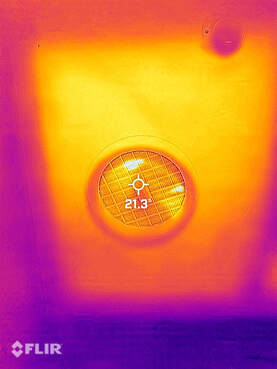
Picture:Showing insulation bat tossed aside by electrician.Thermal image showing where unnecessary heat loss (yellow area) is occuring because an electrician tossed aside a whole ceiling bat instead of trimming it.
If 10% of the ceiling is bare due to insulation being tossed aside or being incomplete, the heat loss can double.

I have rarely gone into a roof space (even a new one) and found the insulation properly distributed. Since I have bought a thermal imager, I have not found a ceiling without an insulation fault of some sort.

The most common issue is ceiling batts tossed aside by a tradesman and not replaced. (Although there are many good tradies, there are too many electricians, air conditioning installers and plumbers who don’t make a habit of checking that the insulation has been returned to the correct place after they have finished their work). If you are employing someone who will be working in the roof space, let them know that any insulation that needs to be removed, needs to be replaced properly (for example trimmed around a fan)

Some of the worst examples of failure to replace insulation occur with down lights. If you have down lights you might have a dozen in the room and if a ceiling batt is tossed aside at each light, you would have 12 displaced ceiling batts, which may well more than double the heat loss or gain through the ceiling.

Often this can be readily improved if this is in an attic roof space. Do bear in mind that depending on the type of downlight you may need to give a gap, which depending on the light and insulation may need to be up to 100mm clear around the light. Check the make and model of the downlight to determine the clearance required.

Although I prefer surface or pendant lights to downlights, some of them, particularly the newer IC4 LED downlights can be safely covered with insulation, however check the manufacturer's instructions. (The light should be labelled as IC4 but it can be difficult to read so take a bright light if you are checking yourself in the ceiling. 

Another common issue is exhaust fans. they need a clearance around them to avoid jamming the blades, but often a whole batt is tossed aside. Ideally the exhaust fan should be a ducted fan and discharged above the roof. If the ceiling space is well vented, e.g. an un-sarked tile roof, depending on your climate you may get away with it discharging into the roof until you replace it. However, it is preferable to install a DraftStoppa  so that you can safely insulate to the DraftStoppa and also so that when the fan is not working you don't get air leakage and lose the heat or cool in your house.

When improving the insulation, gaps in the insulation, for example around framing timbers or at edges, should be filled with offcuts.
 
Insulation that has been wetted or compressed doesn’t perform as well as it should and should be replaced.

Ceiling access covers are often uninsulated. Sometimes the insulation contractor leaves a loose piece to be placed over the access cover, but I have often found that the next contractor doesn't replace it. If the insulation is thick fiberglass it won't glue to the access cover very well. Other options include using a construction adhesive (liquid nails) to glue one of the following:
  • Foilboard 25 x 2400 x 1200mm Cathedral 25 Insulation - Bunnings Australia
  • Bastion 1200 x 600 x 50mm XPS Multi Use Foam Board - Bunnings Australia
  • A cheap alternative would be to glue some bubble wrap (using a liberally spread sealant) to the access panel

Another issue with insulation is often the extent is insufficient.  Ideally the insulation should extend over the top of the walls. 

If you intend doing the insulation yourself there are a number of considerations:
  • Downlights may need clearance to avoid overheating (check the manufacturers recommendations for the model) (not required if they are IC4 LED downlights.
  • Fans opening direct to the ceiling space need a DraftStoppa so you can insulate directly up to them.
  • As with any DIY project, consider safety, e.g. safe access, don't work in the roof space in the heat of a summer afternoon etc.
Insulation can be installed deeper than the ceiling joists, however you need to:
  • ensure you don't cover electrical cables unless an electrician has confirmed that the cable is safe (cables clipped to the structure can have the insulation butting up against it, if it is modern wiring.) If there is any doubt, get it checked by an electrician.
  • consider whether it is safe to move about the ceiling space. If there are appliances in the ceiling (air conditioners, hot water services etc.), you need to ensure safe access for maintenance. This can be achieved by laying the insulation between ceiling joists so the gaps correspond to the location of the joists. Consider installing permanent crawl boards for safe access.) 

If you are planning on increasing the insulation thickness, I suggest you consider creating a plan to ensure you achieve an optimum insulation level and consider what options you should do when. See Energy Audits.

1 Comment
Read More
Residential Electrician in Melbourne link
3/8/2024 01:11:47 am

The Value of Professional Residential Electricians in Melbourne

When it comes to electrical work in your home, hiring a professional residential electrician in Melbourne is essential. Here’s why:

Safety: Handling electrical systems can be risky without proper training. Professional electricians ensure all work is done safely, reducing the risk of electrical fires, shocks, and other hazards. They follow strict safety guidelines to protect both you and your property.

Expertise: Professional electricians have the necessary training and experience to handle a wide range of electrical issues. Their expertise ensures that all work is completed to a high standard, whether it's a simple repair, a complex installation, or troubleshooting a persistent problem.

Wide Range of Services: From installing new lighting fixtures and ceiling fans to upgrading your switchboard and rewiring your home, professional electricians offer a comprehensive range of services. They can also assist with modern smart home installations and energy-efficient solutions.

Compliance with Regulations: Electrical work must meet specific codes and standards to be considered safe and legal. Professional electricians ensure all work complies with Australian standards and local regulations, which is crucial for safety and can affect home insurance and property value.

Reliability and Efficiency: Professional electricians use high-quality materials and the latest tools, ensuring that all work is reliable and efficient. This reduces the likelihood of future issues and the need for costly repairs, providing long-term peace of mind.

Emergency Services: Electrical problems can arise unexpectedly and require immediate attention. Many residential electricians in Melbourne offer emergency services, providing quick and efficient solutions to urgent issues, preventing further damage or danger.

Energy Efficiency: Professional electricians can recommend and install energy-efficient appliances and systems, helping to reduce your electricity bills and minimize your environmental footprint. They can also provide advice on the best practices for energy use in your home.

Professional Advice: Beyond just fixing problems, professional electricians can offer valuable advice on maintaining your home’s electrical system and planning for future upgrades. Their insights can help you make informed decisions about your home’s electrical needs.

In conclusion, hiring a professional residential electrician in Melbourne is a smart decision to ensure the safety, efficiency, and longevity of your home’s electrical systems. Their expertise, adherence to regulations, and commitment to quality work make them an invaluable resource for any homeowner.

Reply


Leave a Reply.


​What we help with: 
  • New construction
  • Renovations 
  • Planning a long-term strategy to improve an existing building 
Our goal is to help people make the most cost-effective decisions to reduce greenhouse gas emissions. 

We will work with you to achieve your goals at the level of expenditure which is comfortable for you. This can be achieved while increasing comfort and amenity. 
Homeowners
​​Low Cost Savings Knowledge base
​
Energy Audits
NatHERS for Existing Homes
​Assisted DIY Energy Audit
Energy Saving Newsletter
​​Residential Efficiency Scorecard​
New homes​
Passive House
Passive House FAQs
​Greenhouse Gases
​​Solar
​​Gift Cards
Needs Survey
General
​Why us
About Clive Blanchard
Success Stories
​Terms of use and Privacy Policy
Builders, Architects, Real Estate 
Architect and Builder Services
7-Star Homes FAQ
NCC Knowledge base
NCC Newsletter
How to sell an energy efficient home
Contact us
​​
​Contact Form (Ask us a question)
​​Ph: 0407 718 949
​Email:
We acknowledge the Traditional Owners of the Land on which we live and work and recognise their continued connection to Country. We pay our respect to their elders, past and present and extend that respect to all Aboriginal and Torres Strait Islander people.